What Is a Planogram? How Shelf Placement Works
What a planogram is, who makes it, how shelf position and facings affect sales, and how new CPG items get into the planogram at a reset.
A planogram is a diagram that shows exactly where every item sits on a retail shelf: which shelf, how many facings and next to what. Retailers use planograms to keep stores consistent and to give space to the items that sell. New items usually enter the planogram at a scheduled reset after the category review.
Who makes planograms?
The retailer's category and space planning teams build them, using sales data and planogram software. Some retailers also ask a leading brand in the category, called a category captain, to recommend the layout. Stores then set the shelf to match.
Why shelf position matters
- Eye-level shelves usually sell more than top and bottom shelves
- More facings mean more visibility and fewer out-of-stocks
- Placement next to the category leader can borrow its traffic
- Endcaps and displays outside the planogram can add big lifts during promotions
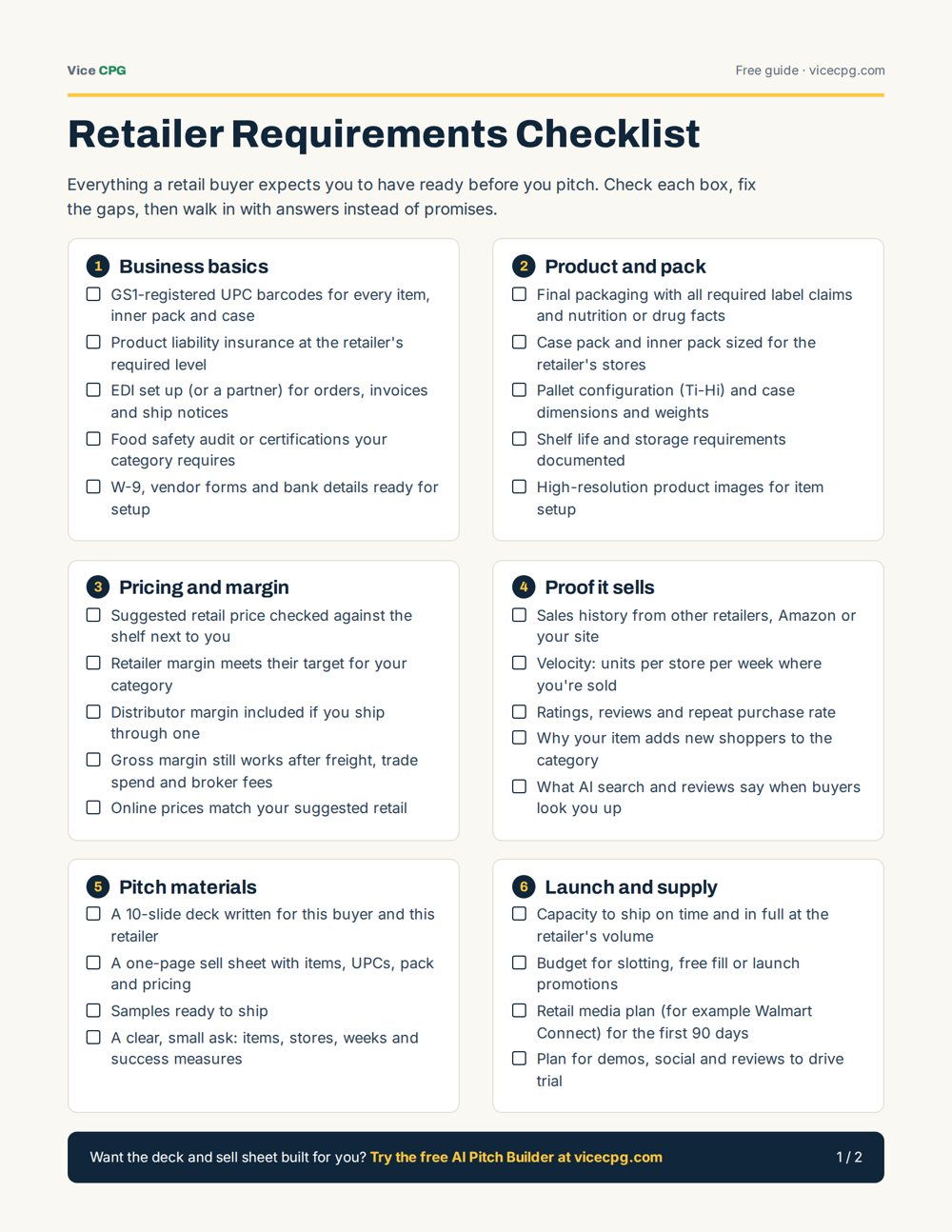
Retailer Requirements Checklist
Everything a retail buyer expects you to have ready before you pitch: barcodes, pack, pricing, proof, pitch materials and launch plan.
Get the checklistHow a new item gets into the planogram
- Win the category reviewThe buyer approves your item for the next planogram.
- Item setupYour item's size, pack and images go into the retailer's systems so planners can place it.
- The resetStores rebuild the shelf to the new planogram on a set date.
- Stay in stockAn empty spot on the shelf tells the buyer the item isn't working.
Keeping your space
At the next review, the buyer looks at how your item sold in its space. Strong velocity can earn more facings; weak sales can cost you the spot. Retail media, promotions and reviews all help your item earn its space.
Questions
What does POG mean?
POG is short for planogram.
Can a brand choose its shelf position?
Not directly. The retailer decides, but strong sales, a good category story and sometimes paid placement can influence where you land.
How often do planograms change?
Most categories reset about once a year, and some fast-moving categories more often.
See where your product stands
Related guides
How to Pitch a Retail Buyer (and Win the Line Review)
How to pitch a retail buyer: when category and line reviews happen, what buyers want to see, how to structure a retail pitch deck, and how to follow up.
Slotting Fees: What They Are and What They Cost
What slotting fees are, how much retailers charge, which retailers use them, the alternatives like free fill, and how to budget slotting into a launch.
How to Become a Walmart Supplier
How to become a Walmart supplier: requirements, the application, what the buyer looks for, how line reviews work, and how to keep your item on the shelf.