Slotting Fees: What They Are and What They Cost
What slotting fees are, how much retailers charge, which retailers use them, the alternatives like free fill, and how to budget slotting into a launch.
Slotting fees are payments a manufacturer makes to a retailer to get a new item onto the shelf. They cover the retailer's cost and risk of adding the item: setting it up, making room in the warehouse and on the shelf, and giving up space from another product. They are most common in conventional grocery and vary widely by retailer, category and number of stores.
How much are slotting fees?
There is no public price list. Fees are negotiated per item, per retailer, and often per market. A study by the Federal Trade Commission in 2003 found per-item, per-market fees ranging from a few thousand dollars to more than $20,000 depending on the category. For a national grocery chain, slotting across all stores can reach six figures per item.
Smaller regional chains and independent stores usually charge far less, and some charge nothing at all.
Other forms slotting can take
- Free fill: free product to fill the shelf on the first order
- Off-invoice allowances: a discount on the first orders
- Billbacks or deductions taken from your invoices
- Promotion commitments, like a set number of TPRs in year one
- Failure fees if the item is discontinued
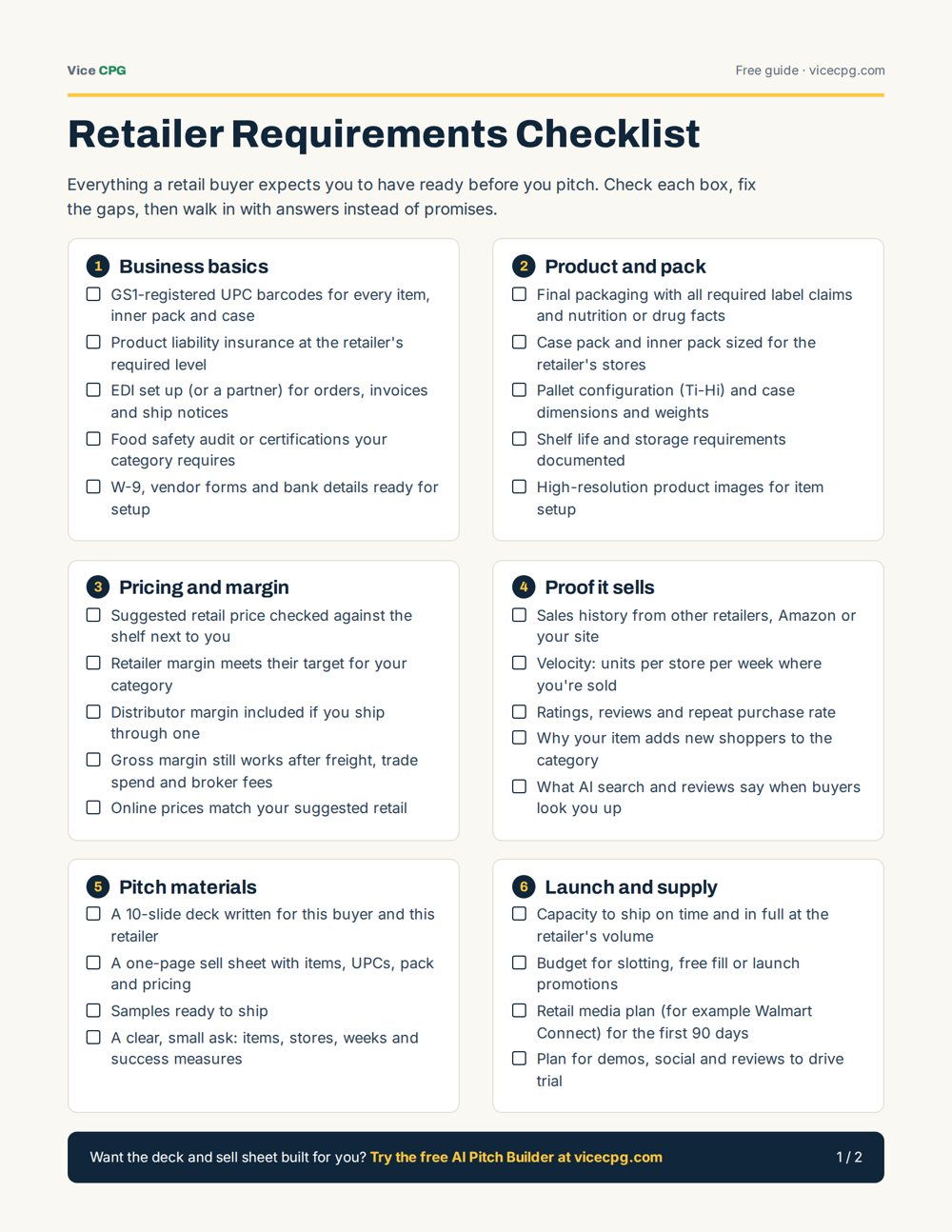
Retailer Requirements Checklist
Everything a retail buyer expects you to have ready before you pitch: barcodes, pack, pricing, proof, pitch materials and launch plan.
Get the checklistWhich retailers charge slotting fees?
Slotting is most common in conventional supermarkets. Walmart and Costco are known for pushing for lower cost prices instead of charging slotting. Natural and specialty retailers often ask for free fill and promotional support. Always ask the buyer or your broker exactly what the retailer expects before you commit.
How to budget for slotting
- Ask earlyFind out the retailer's expectation for new items before you build your price.
- Model it into trade spendTreat slotting and free fill as part of your trade budget, not a surprise cost.
- Spread it over the payback periodDivide the cost by the units you expect to sell in year one to see what it really costs per unit.
- Negotiate the formOffer free fill or a promotional plan instead of cash when that fits your cash flow better.
Retailer guides
Questions
Are slotting fees legal?
Yes. Slotting fees are legal in the U.S. and common in grocery. They should be documented in your agreement with the retailer.
Do slotting fees guarantee shelf space?
They pay for the placement, not for how long you stay. If the item doesn't sell, the retailer can still drop it at the next review.
Can I avoid slotting fees?
Sometimes. Starting with retailers that don't charge them, offering free fill, or starting in a small store test can lower the upfront cost.
See where your product stands
Related guides
Trade Spend: What It Is and How to Manage It
What trade spend is in CPG, the main types (TPRs, off-invoice, billbacks, slotting), typical budgets, and how to plan and track it so it pays back.
Wholesale Pricing and Retail Margin: How to Price a CPG Product
How to set wholesale and retail prices for a CPG product: keystone pricing, margin vs markup, what retailers and distributors expect, and a worked price waterfall.
How to Pitch a Retail Buyer (and Win the Line Review)
How to pitch a retail buyer: when category and line reviews happen, what buyers want to see, how to structure a retail pitch deck, and how to follow up.