Trade Spend: What It Is and How to Manage It
What trade spend is in CPG, the main types (TPRs, off-invoice, billbacks, slotting), typical budgets, and how to plan and track it so it pays back.
Trade spend is the money a CPG brand spends through retailers and distributors to win and keep distribution and drive sales: price discounts, promotions, slotting, free fill, ads in the retailer's circular and in-store support. For many CPG companies it is one of the largest costs after the product itself, often around 20 percent of gross sales.
Types of trade spend
- Temporary price reductions (TPRs) and other price promotions
- Off-invoice allowances: a discount taken on the invoice
- Billbacks and scan-backs: the retailer is paid back for units sold on promotion
- Slotting fees and free fill for new items
- Co-op advertising, circular features and displays
- Demos and sampling
- Manufacturer chargebacks paid to distributors
How much should you budget?
Trade spend varies by category, channel and stage. Many CPG companies spend roughly 15 to 25 percent of gross sales on trade, and launches often run higher in year one. The right number is the one your margin can support and that produces sales you keep after the promotion ends.
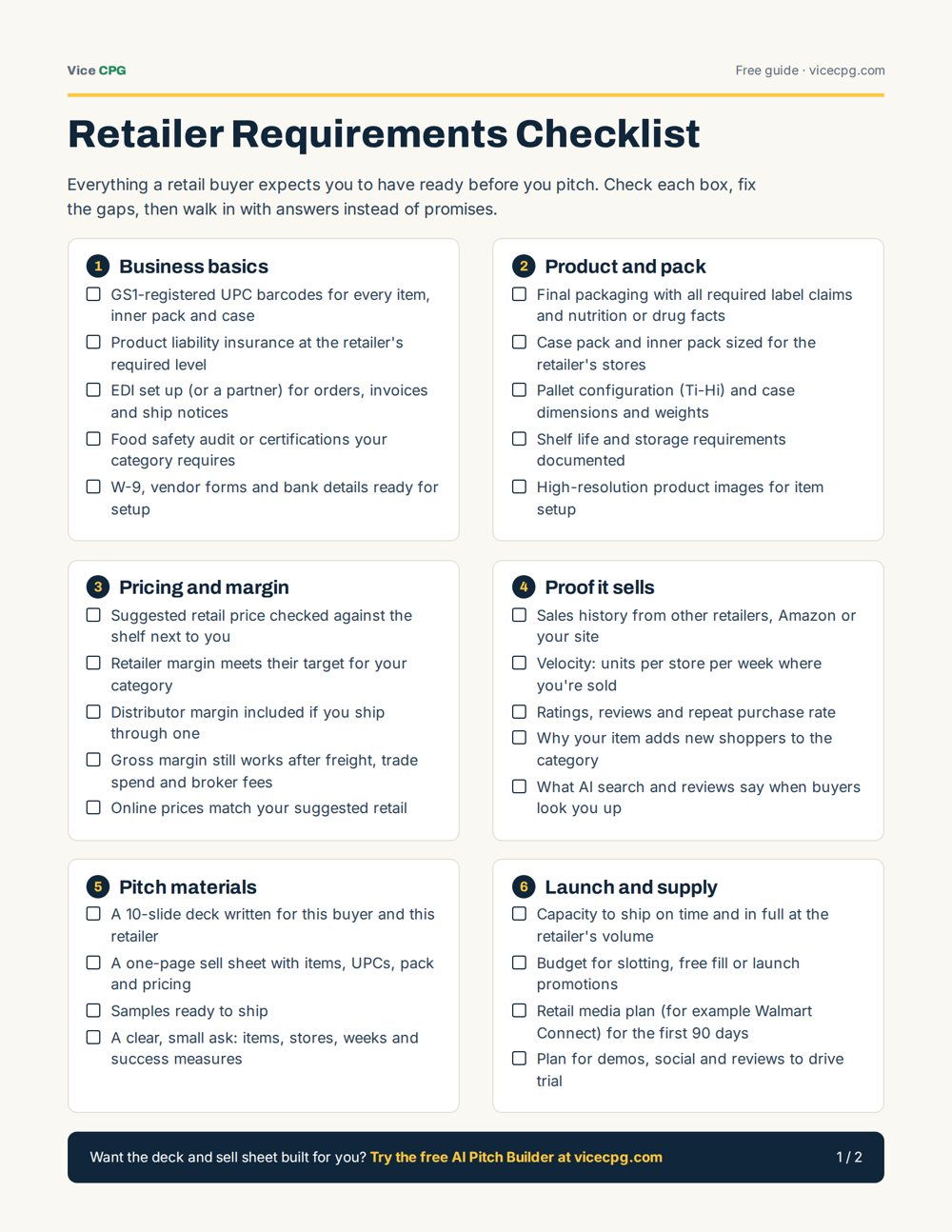
Retailer Requirements Checklist
Everything a retail buyer expects you to have ready before you pitch: barcodes, pack, pricing, proof, pitch materials and launch plan.
Get the checklistHow to manage trade spend
- Plan by retailerBuild a calendar of promotions for each retailer with expected lift and cost.
- Price it into your modelCheck that your wholesale price still works after trade, freight and broker fees.
- Track deductionsRetailers and distributors take trade from your invoices. Match every deduction to an agreed promotion.
- Measure liftCompare sales during and after each promotion with a normal week.
- Cut what doesn't pay backMove money from weak promotions to ones that bring new shoppers.
Questions
Is trade spend the same as marketing?
No. Trade spend goes through the retailer or distributor, such as discounts and promotions. Marketing reaches shoppers directly, such as social and digital ads. Retail media sits in between.
Why is trade spend so hard to track?
Much of it arrives as deductions from your invoices, often weeks later and with little detail. Good records and a promotion calendar make it easier.
Does retail media count as trade spend?
It depends on how you budget it. Many brands keep retail media, like Walmart Connect, as a separate line so they can measure its return.
See where your product stands
Related guides
Wholesale Pricing and Retail Margin: How to Price a CPG Product
How to set wholesale and retail prices for a CPG product: keystone pricing, margin vs markup, what retailers and distributors expect, and a worked price waterfall.
Slotting Fees: What They Are and What They Cost
What slotting fees are, how much retailers charge, which retailers use them, the alternatives like free fill, and how to budget slotting into a launch.
What Does a Food Broker Do? Costs, Commission and When You Need One
What a food broker does, how brokers are paid, typical commission, broker vs distributor, and how to decide if your CPG brand needs one.